Nplate® is a thrombopoietin receptor agonist indicated for the treatment of thrombocytopenia in adult patients with immune
... Read More

2019 IMMUNE THROMBOCYTOPENIA TREATMENT GUIDELINES
Limit duration of first-line steroid use prior to starting a second-line therapy, such as Nplate® (romiplostim)7,8
In 2019 the American Society of Hematology (ASH) and the International Consensus Report (ICR) released updates to their guidelines for ITP treatment. These updates are based on a critical review of relevant articles published over the last 10 years.7,8
Recent evidence suggests that ITP is often managed with prolonged steroid use, exposing patients to side effects that may have long-term implications.7
ASH and ICR ITP treatment guidelines recommend limiting duration of steroid use to a maximum of 6 to 8 weeks7,8
ASH recommendation8
≤ 6 weeks of steroid treatment
is preferred vs prolonged, continuous use
Delay splenectomy until after 1 year
Access the full ASH Guidelines.
Read more
ICR recommendation7
≤ 6 weeks of steroid treatment (8 weeks max)
in patients who achieve a response
even if platelet counts drop during taper
Delay splenectomy until ≥ 1 year to 2 years
Access the full ICR Guidelines.
Read more
ASH ITP guidelines recommend a TPO-RA as a
second-line therapy over rituximab1,8,*
second-line therapy over rituximab1,8,*
*Rituximab is not FDA-approved for use in ITP.5
See how Nplate® may be right for your patients

For adults with newly diagnosed/persistent ITP right after
an insufficient response to steroids*
Your next move
could determine hers


For adults with newly diagnosed/persistent ITP right after
an insufficient response to steroids*
Start Nplate® earlier to give your patients platelet control and the opportunity for treatment‑free remission1,2
Could your next patient benefit?Treatment-free remission was a secondary endpoint defined as maintaining every platelet count at ≥ 50 x 109/L for at least 6 months in the absence of any ITP treatment, and occurred in 32% (n = 24/75) of patients.1,2
The primary endpoint of the study (N = 75) was the cumulative number of months in which patients achieved a platelet response.2
*Nplate® was initiated following a platelet count ≤ 30 x 109/L at any time during the 4-week screening period. Nplate® was initiated within 6 months of ITP diagnosis.1,2
STUDY DESIGN

In newly diagnosed/persistent ITP
The first prospective trial to evaluate treatment‑free remission with Nplate® (romiplostim)2
PATIENT CHARACTERISTICS

Nplate® (romiplostim) clinical trial in adults with newly diagnosed/persistent ITP1,2
Patients received Nplate® within 6 months of diagnosis,
right after insufficient response to steroids1,2
PLATELET CONTROL

Nplate® (romiplostim) offers patients the potential for a rapid platelet response and lasting stability1,2
Primary endpoint: 61% of patients sustained platelet counts ≥ 50 x 109/L
for ≥ 11 months (n = 46/75)2
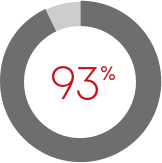
Platelet response
of patients achieved
a platelet response1,*
(n = 70/75)
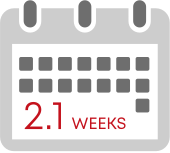
Rapid onset
median time to onset, with
responses occurring as early
as week 1 of treatment1,6,†
(95% Cl: 1.1, 3.0)
*Platelet response was defined as a platelet count ≥ 50 x 109/L.1
†5.56%, 47.22%, and 61.11% of patients responded by weeks 1, 2, and 3, respectively.6
CI, confidence interval.
TREATMENT‑FREE REMISSION

Clinical trial results demonstrated that treatment-free remission is possible with Nplate® (romiplostim)1,2

~1 out of 3* patients achieved treatment‑free remission (n = 24/75)1,2
- Nplate® maintained every platelet count at ≥ 50 x 109/L for at least 6 months without any ITP treatment1
- Nplate® was used right after insufficient response to steroids1
Median time to onset of treatment‑free remission was 27 weeks (range, 6–57)1,2
- Most patients were tapered off of Nplate® as determined by their platelet counts following the PI-recommended dosing regimen† (n = 20/24)1-3
- Adjust the weekly Nplate® dose by increments of 1 mcg/kg (not to exceed 10 mcg/kg) to maintain a platelet count ≥ 50 x 109/L to ≤ 200 x 109/L1,2
- In patients achieving treatment-free remission, median weekly Nplate® dose was 1.7 mcg/kg prior to stopping treatment (range, 0.7-7.6)4
- Dose reductions are described for platelet counts > 200 x 109/L. Please see Section 2.1 of the Nplate® Prescribing Information1‑3
Platelet count and dose in patients achieving
treatment-free remission (n = 24)1-3
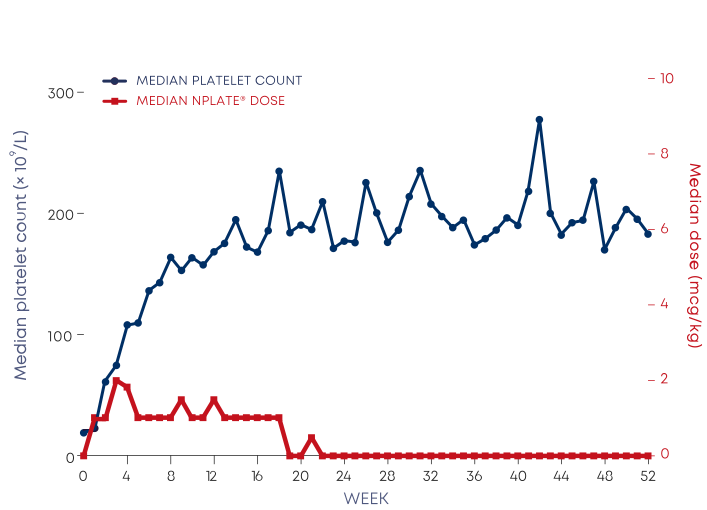

20/24 patients entered remission during the 52-week treatment period
based on the recommended dosage regimen in the Nplate® PI1-3,†
based on the recommended dosage regimen in the Nplate® PI1-3,†
Visit the dosing page to learn more about Nplate® dosing.
*32% of patients achieved treatment‑free remission.1,2
†This regimen includes reducing, withholding, and discontinuing Nplate® if/when platelet counts exceed certain levels. Of the 24 patients who achieved treatment‑free remission, 20 (83%) discontinued Nplate® based on this regimen during the 52-week treatment period; 4 patients (17%) tapered Nplate® at the end of the 52-week treatment period using a different dosage adjustment approach per the study protocol.1‑3
SAFETY PROFILE/SIDE EFFECTS

The side effect profile was consistent with the known profile of Nplate® (romiplostim)2
GUIDELINES

2019 Immune thrombocytopenia
treatment guidelines
EXPERT VIDEO

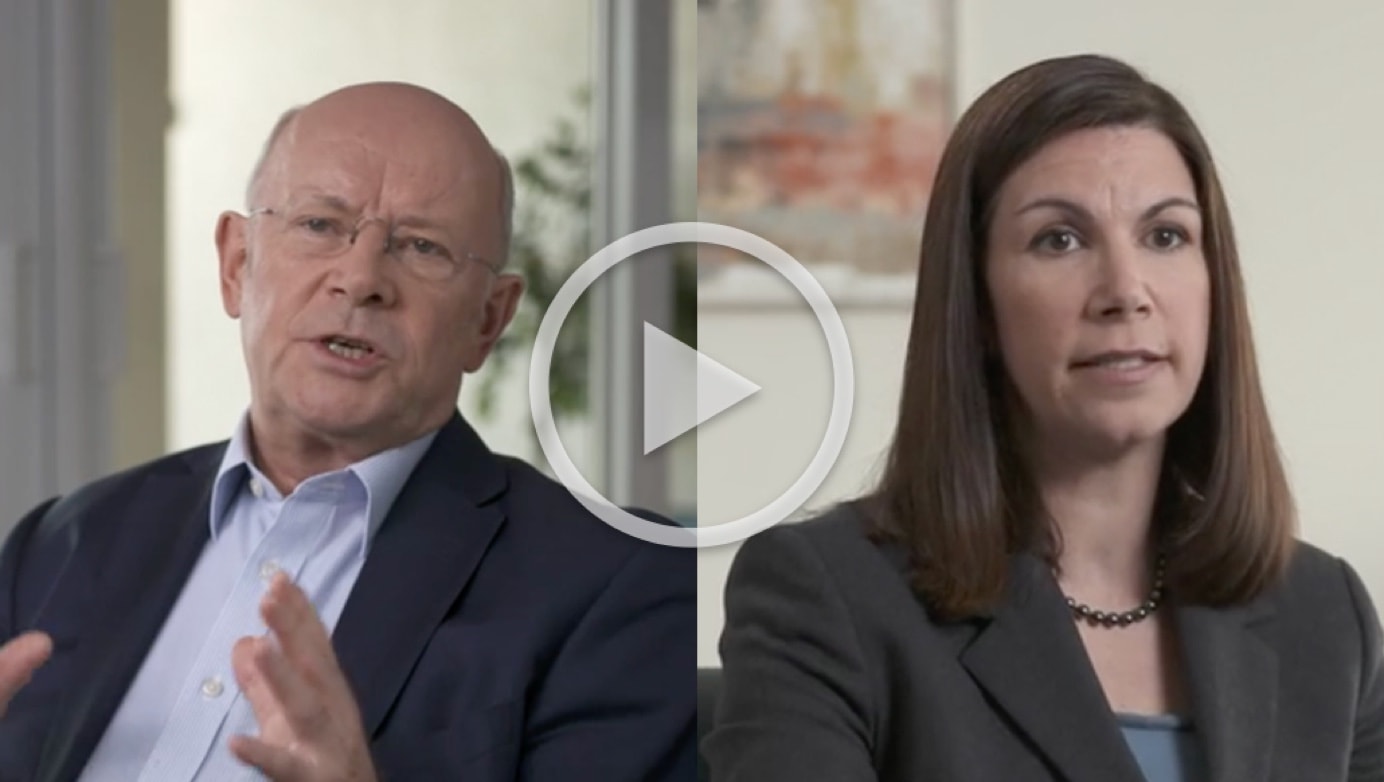
Experts discuss using Nplate® (romiplostim) earlier for potential treatment-free remission1,2
Dr Adrian Newland (primary investigator) and Dr Ivy Altomare discuss results from the phase 2 study and how they could impact patients’ immune thrombocytopenia treatment goals2
Expert Video
Nplate® is the only TPO-RA approved for second-line use within 6 months of ITP diagnosis1,2
Could your next ITP patient benefit from earlier Nplate® use?